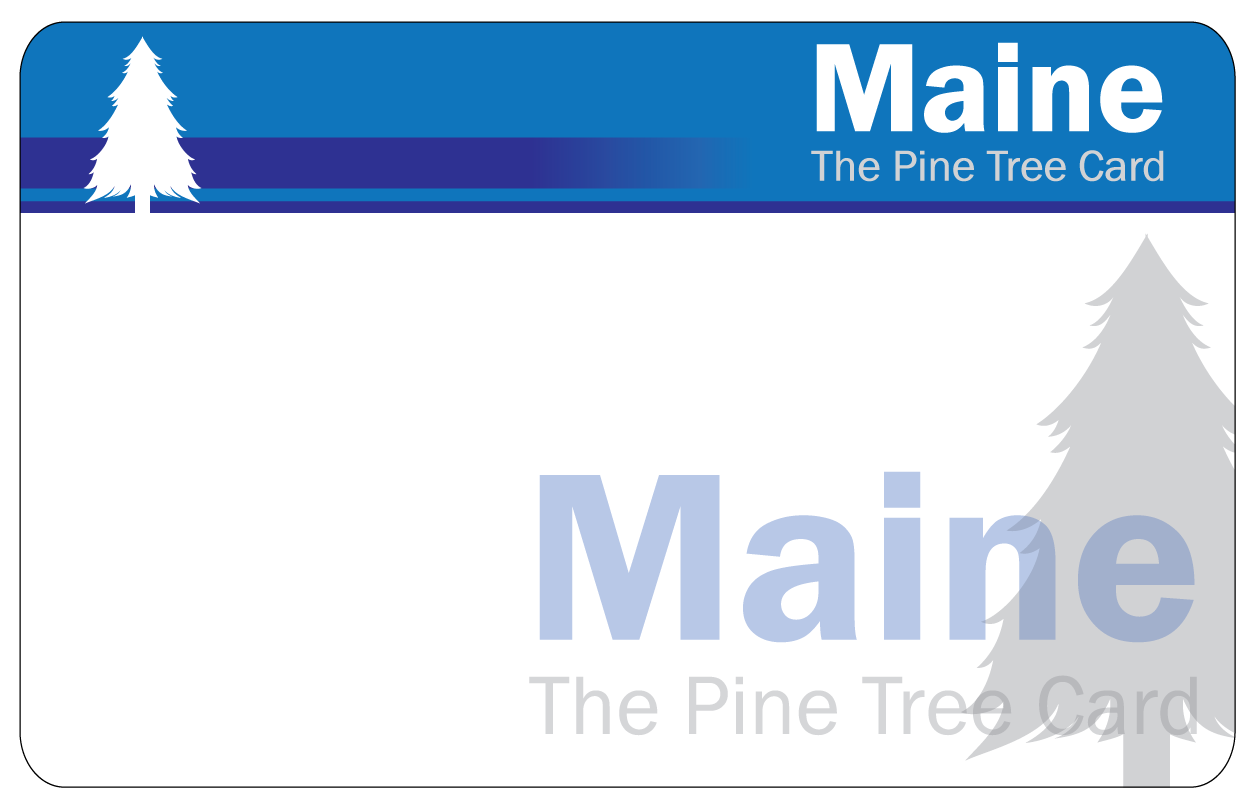
SNAP helps people pay for food. The program may also be called Food Assistance (it used to be called Food Stamps). You get a card that works like a debit card from a bank. You can use the card to buy food at grocery stores. The card is called the Pine Tree Card or an EBT card.
Most people with low income are eligible for SNAP. You do not have to live with children, be getting TANF, or be elderly or disabled to get SNAP benefits. Many people work and get these benefits.
You can check if you're eligible for SNAP and estimate your monthly benefit with Pine Tree Legal Assistance's tool:
Updated: October 2025
For an in-depth guide to SNAP, see the SNAP Assister Guide (last updated March 2025), or Pine Tree Legal Aid has a shorter guide that will help answer most common questions about SNAP.
Congress and the Trump Administration passed a budget in July 2025 that made harmful changes to the SNAP program.
Beginning in September 2025, more people will have to report work, training, or volunteer hours in order to keep their SNAP benefits.
Adults younger than age 65 and parents/caregivers of children aged 14 or older are now considered "Able-Bodied Adult Without Dependents" or ABAWDs and must report at least 20 hours of work*, training, or volunteer hours per week (or 80 hours per month) to the Maine Department of Health and Human Services (DHHS). If you have been screened by DHHS and told that you fit into the ABAWD category, you may lose your SNAP benefits after 3 months if you do not report these hours.
*The “20 hours of work” is based on the federal minimum wage, but because Maine has a higher minimum wage, you can work fewer hours (more details under “What activities can meet the work-reporting requirements?” tab).
Some people who were previously exempt from work reporting, including people experiencing homelessness, veterans, and former foster youth are no longer excused.
Updated: October 2025
ABAWD is short for Able-Bodied Adult Without Dependents.
The government uses the term "ABAWD" to describe people using SNAP who are subject to the 3 month time limit. However, we know that doesn’t reflect everyone’s experience and prefer to say "time-limited."
You are an "ABAWD" or time-limited for SNAP if you meet ALL these criteria:
All individuals who are “ABAWDs” in a household must meet the requirements.
Updated: October 2025
Many people are exempt from work-reporting requirements. Under federal law, DHHS must screen SNAP recipients for all exemptions before starting the 3-month clock.
If you are age 65 or older, you are automatically exempt from work requirements.
If any of the categories below apply to you, make sure to report them to DHHS as soon as possible:
| You are EXEMPT from work-reporting if you meet AT LEAST ONE of these: | |
|---|---|
| Children, Youth & Caregivers | Pregnant |
| Caring for a dependent child under the age of 6 | |
| Someone in your SNAP household is under the age of 14 | |
| 16 and 17 year olds who are employed but their wages are not the main source of income for the household | |
| Caring for a person with disabilities who cannot care for themselves | |
| Education | Students, no matter their age, enrolled at least half time in school, a training program, or an institution of higher education such as a university, community college, or vocational school |
| Employment & Income | Receiving unemployment benefits |
| Meeting work requirements for another program, including TANF | |
| Adults who earn at least $217.50 per week (30 x the federal minimum wage), no matter the number of hours worked | |
| "Fitness to Work" | Physically or mentally unable to work |
| Receiving a disability benefit or payment | |
| In substance abuse treatment or rehabilitation program | |
| Member of a Tribal Community | Member of a federally recognized indigenous tribe or "Urban Indian" or "California Indian" as defined by federal law |
Note: Congress removed the exemptions for veterans, former foster youth, and people who are unhoused beginning in 2025.
Updated: October 2025
Any combination of these work-related activities over 20 hours per week.
*The “20 hours” for paid work is based on the federal minimum wage, but because Maine has a higher minimum wage, you can work fewer hours. To fulfill the requirement ” in Maine you need to earn and report wages that equal more than $217.50 per week (30x the federal minimum wage).
If you want to get the number of hours that you need to work, you can divide $217.50 by your current hourly wage.
For example, if your hourly wage is $16, you would take $217.50/$16 which equals 13.59 hours, so you would need to work 14 hours a week to meet the requirement.
NOTE: If you participate in workfare for General Assistance (GA), assigned hours qualify, but there are slightly different rules AND these hours can NOT be combined with other activities. Make sure to tell DHHS about your participation.
If you already meet the work requirements and have given that information to DHHS, you do not have to provide proof every month unless something changes.
Updated: October 2025
If you already meet the work-reporting requirement or you think you may be exempt, contact DHHS as soon as possible to avoid losing your benefits.
You can contact DHHS by:
Updated: October 2025
You can only get three months of SNAP in a 36-month (three-year) period if you are not excused from work-reporting requirements AND you don’t report enough work, training, or volunteer hours.
This means you could lose your SNAP benefits after 3 months if DHHS finds that you meet the new definition of an "ABAWD" when you apply or during your next 6-month review.
Updated: October 2025
To learn more, visit: maine.gov/dhhs/ofi/programs-services/food-supplement
Updated: October 2025
If you get SNAP and you've lost your food due to a power outage that lasts longer than 8 hours, you can ask for replacement benefits.
To get your SNAP replaced, you need to:
DHHS will verify the power outage and if you are eligible, they will replace up to one month’s worth of SNAP benefits.
If you have been told that you can’t get SNAP, but you think that you should qualify, contact us for help.
If you’re having a hard time getting enough to eat, or if you want to stretch your SNAP a little further, try these resources:
211 is a free, confidential information and referral service that connects people of all ages across Maine to local services, including food resources. Call 211 and ask about food resources or visit 211Maine.org. If you're having trouble getting through to 211, you can call 866-811-5695. You can also text your zip code to 898-211.
Search Good Shepherd Food Bank’s Food Finder Map for a list of food pantries and meal sites in your area.
Visit a participating farmer’s market (Maine Harvest Bucks) or store (Farm Fresh Rewards) to earn extra SNAP dollars to buy fresh fruits and vegetables from local farmers.
Contact your regional Area Agency on Aging or call 1-877-353-3771 for information about additional supports for older adults and individuals with disabilities including home-delivered meals for those who are homebound and cannot prepare food for themselves.
For income-eligible older adults, learn more about the Maine Senior FarmShare Program at (207) 287-3491 or by emailing SeniorFarmShare.AGR@maine.gov. Available April - November.
Address: 126 Sewall Street, Augusta, ME 04330
Phone: (866) 626-7059 (toll-free)
Proud member of MaineShare | Terms of Use | Privacy Policy | Donate Online